Ph.D.
From 2017 to 2020, I pursued a PhD in Technology, Innovation, and Management (TIM) at the University of Bergamo. This program is designed to train researchers and professionals who can bridge the gap between technology, business, and society. The curriculum provided me with the skills and scientific tools needed to manage research and innovation projects within an international context


Visit at Georgetown University for a joint research project - Washington D.C. (US) - May 2019
PhD Research - Overview
My main research project during my doctoral program was structured into four separate studies. Each of these papers addressed a specific aspect of my field, contributing independent findings and analyses. The integration of these four studies then formed the basis of my final thesis, providing a complete picture of the research I conducted.
Research projects
Specialization or Crossfunctional Integration of Manufacturing and R&D in Multinational Enterprises
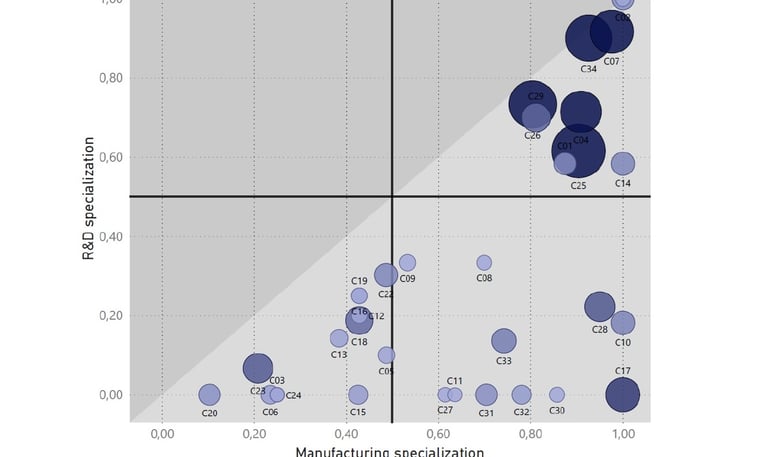
The research collects secondary data at a network- and plant-level to explore how multinationals configure their networks from a geographical perspective. The research concerns the localization and the integration between manufacturing, R&D, and other functional networks within multinational companies. A fuzzy-set Qualitative Comparative Analysis (QCA) is conducted to examine the configurational effects of six conditions impacting the specialization of manufacturing and R&D functions. The results offer an innovative perspective emphasizing the presence of multiple different configurations linked to high and low levels of manufacturing and R&D specialization
Manufacturing Subnetwork: Conceptualization and Implications for Practice and Research
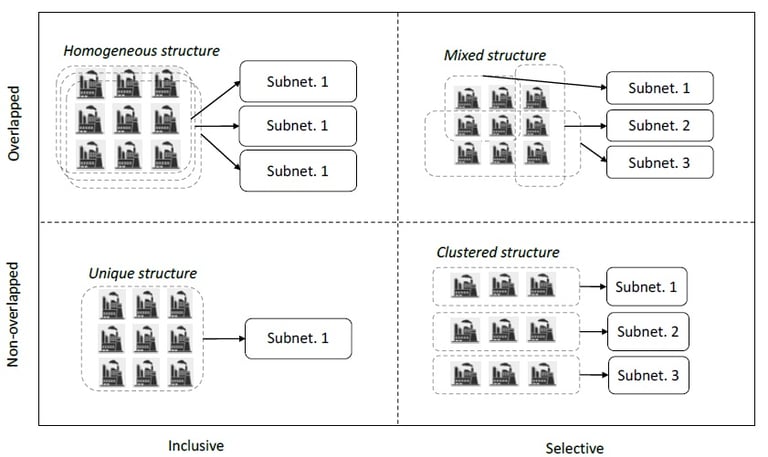
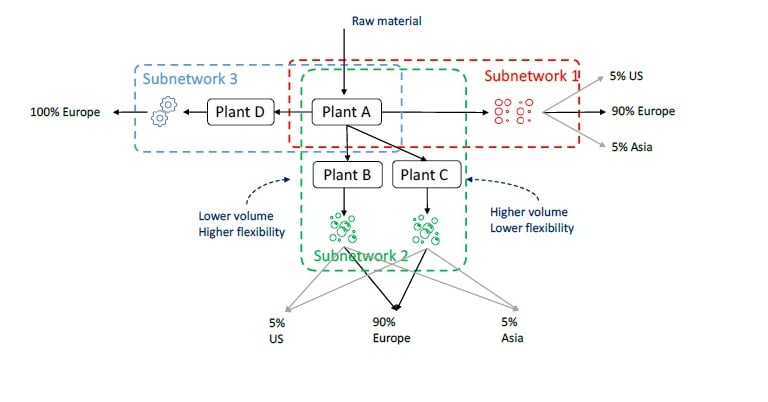
The research offers a definition and a clear conceptualization of the "manufacturing subnetwork", enriching recent literature on global production networks. The research is useful for highlighting the main characteristics of the concept and the difference with other well-known objects in literature. Furthermore, it shows the theoretical and practical implications that the introduction of the subnetwork perspective might have on multi-plant companies. Examples from four real cases are used to provide additional evidence.
Uncensored Subnetworks in Multinational Enterprises: Developing a Descriptive Tool Through a Design Science Approach
The resarch designs and applies an interesting assessment tool that helps identify subnetworks in multinational companies and understand their structure. In order to build the tool, a Design Science Research (DSR) approach was developed through a trial-and-error-type iterative process by means of five cases. Finally, the tool is applied to an additional case in a global manufacturing company. The tool can represent a useful, practical way for managers to disassemble and study the subnetworks in their companies.
How to Deal with a Plant having a twofold Manufacturing Mission in an International Manufacturing Network?
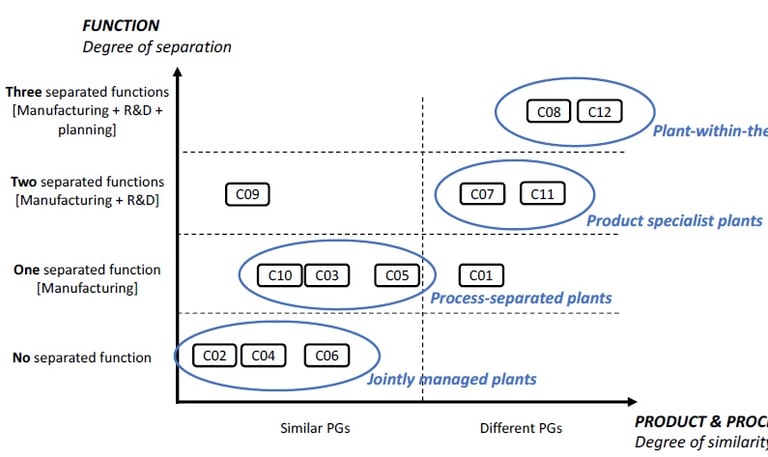
This project aims investigates the manufacturing practices of plants producing multiple differentiated product groups. The analysis compares and contrasts the operations of companies in managing their functions or departments (production, R&D, planning, warehouse and logistics, sales) when two distinct product groups – one including standard and low-tech products, the other including personalized and high-tech products – are manufactured in the same factory. Besides, the contribution discusses the role of the plants and the challenges in such a configuration. Methodologically, an exploratory multiple case-study research is conducted on twelve plants belonging to international networks. The relevance of the paper lies in the analysis of the potential double productive role of plants, providing an intriguing theoretical starting point for further empirical contributions.


Joint Publication
Abstract
Many firms have started Industry 4.0 (I4.0) initiatives in recent years, without having a sound understanding of the effects generated by the technologies introduction. This research provides indications of what to expect from the implementation of two key technologies for I4.0: big data analytics and manufacturing execution systems. The study explores the relationships between these technologies’ implementation and a set of performance effects. Additionally, it analyses the influence of the organisational structure. A set of hypotheses derived from literature builds the basis for the quantitative analysis of an industry survey with 116 participants from German-speaking countries. The results show that these technologies have distinct, partially unexpected, performance effects. Furthermore, this research provides evidence that the organisational structure of technology implementation plays no significant role in the attainment of higher technology implementation levels.
Research projects
Specialization or Crossfunctional Integration of Manufacturing and R&D in Multinational Enterprises
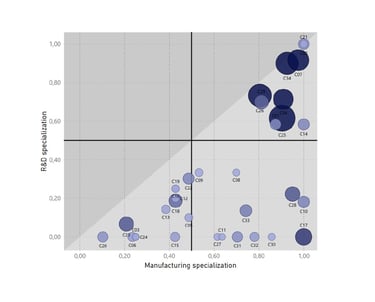
The research collects secondary data at a network- and plant-level to explore how multinationals configure their networks from a geographical perspective. The research concerns the localization and the integration between manufacturing, R&D, and other functional networks within multinational companies. A fuzzy-set Qualitative Comparative Analysis (QCA) is conducted to examine the configurational effects of six conditions impacting the specialization of manufacturing and R&D functions. The results offer an innovative perspective emphasizing the presence of multiple different configurations linked to high and low levels of manufacturing and R&D specialization.
Manufacturing Subnetwork: Conceptualization and Implications for Practice and Research
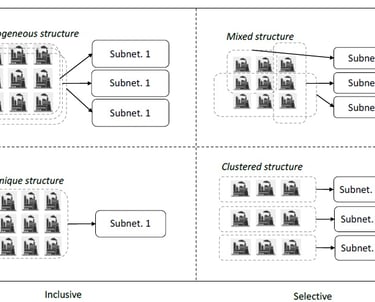
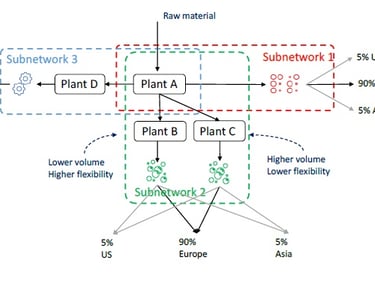
The research offers a definition and a clear conceptualization of the "manufacturing subnetwork", enriching recent literature on global production networks. The research is useful for highlighting the main characteristics of the concept and the difference with other well-known objects in literature. Furthermore, it shows the theoretical and practical implications that the introduction of the subnetwork perspective might have on multi-plant companies. Examples from four real cases are used to provide additional evidence.
Uncensored Subnetworks in Multinational Enterprises: Developing a Descriptive Tool Through a Design Science Approach
The resarch designs and applies an assessment tool that helps identify subnetworks in multinational companies and understand their structure. In order to build the tool, a Design Science Research (DSR) approach was developed through a trial-and-error-type iterative process by means of five cases. Finally, the tool is applied to an additional case in a global manufacturing company. The tool can represent a useful, practical way for managers to disassemble and study the subnetworks in their companies.
How to Deal with a Plant having a twofold Manufacturing Mission in an International Manufacturing Network?
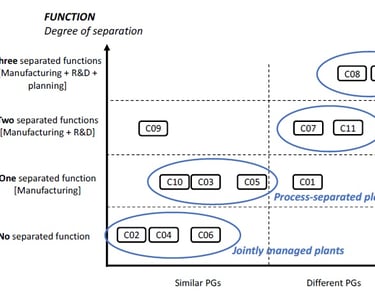
This project aims investigates the manufacturing practices of plants producing multiple differentiated product groups. The analysis compares and contrasts the operations of companies in managing their functions or departments (production, R&D, planning, warehouse and logistics, sales) when two distinct product groups – one including standard and low-tech products, the other including personalized and high-tech products – are manufactured in the same factory. Besides, the contribution discusses the role of the plants and the challenges in such a configuration. Methodologically, an exploratory multiple case-study research is conducted on twelve plants belonging to international networks.
PhD Research - Overview
My main research project during my doctoral program was structured into four separate studies. Each of these papers addressed a specific aspect of my field, contributing independent findings and analyses. The integration of these four studies then formed the basis of my final thesis, providing a complete picture of the research I conducted.